
OXFORD, UK — July 21, 2026
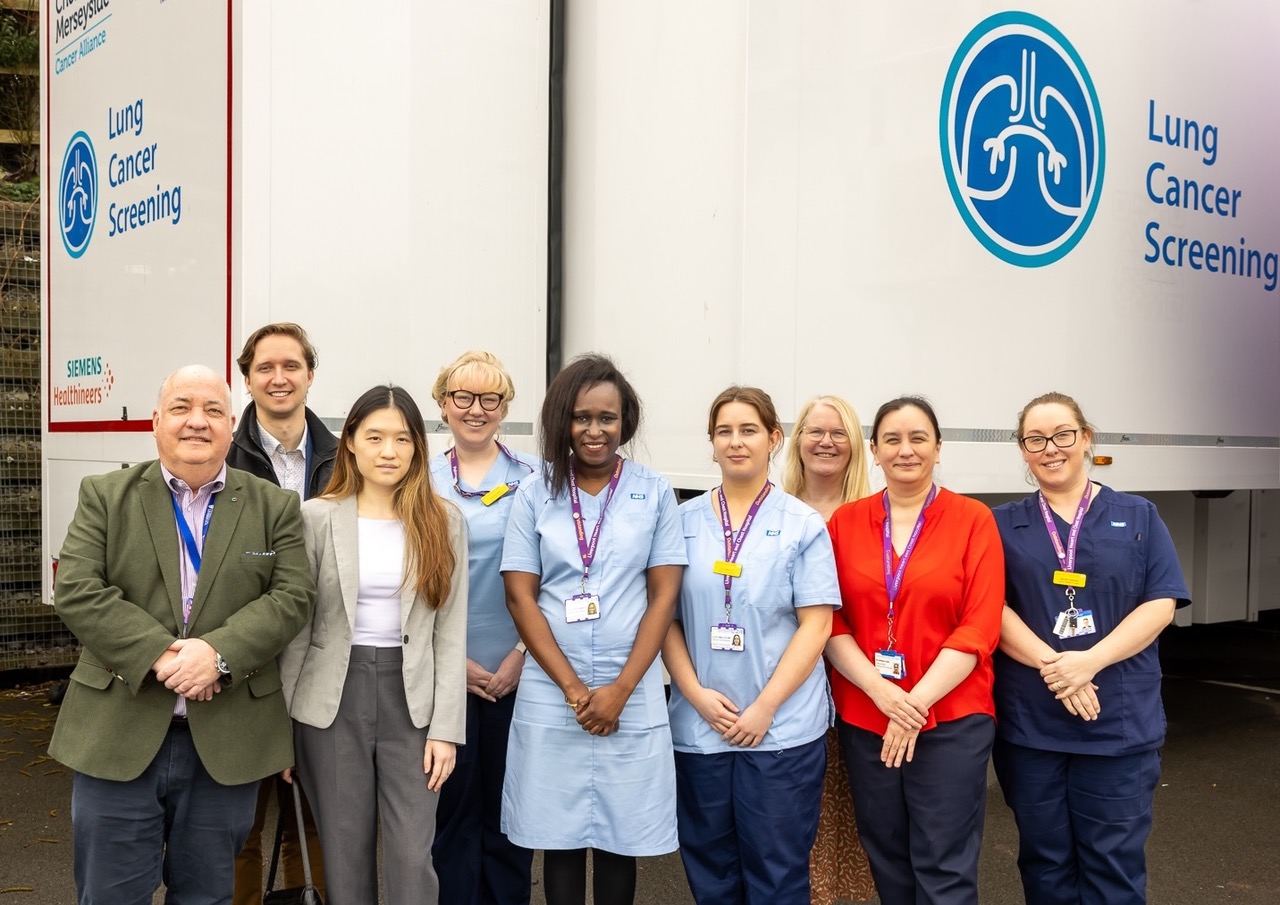
Thousands of people in Cheshire and Merseyside are being invited to take part in pioneering Liverpool-led research that could shape the future of lung cancer screening.
Researchers in the city are investigating if a simple blood test can identify people at risk of lung cancer so that scans can be targeted at them to spot any disease in its early stages.
The APPLIED-LUNG: Transforming Lung Cancer Screening study is co-funded by the National Institute for Health and Care Research (NIHR) and Oxford Cancer Analytics (OXcan), including a £1.68 million NIHR i4i Product Development Award.
The APPLIED-LUNG study has already recruited around 1,500 participants since launching earlier this year and aims to involve up to 11,000 people attending routine low-dose CT scans as part of theCheshire and Merseyside NHS Lung Cancer Screening Programme.
Lung cancer is one of the UK’s biggest cancer killers, accounting for one in seven (around 50,000) of new cancers diagnosed each year. Improving early diagnosis is vital to give people the best chance of successful treatment and over the past several years the NHS has rolled out lung cancer screening for people at high risk using low dose CT scans, with Cheshire and Merseyside one of the first areas of the UK to introduce it.
CT scans can detect lung cancers earlier, but rolling out screening at scale requires significant NHS resources. The APPLIED-LUNG study is investigating whether a blood test developed by OXcan could be a solution. The Liverpool researchers hope this blood-based approach could one day help make lung cancer screening more efficient, accessible and sustainable.
Participants who agree to take part in the APPLIED-LUNG study give a one-off research blood sample when they attend their scheduled scan appointment. Researchers will compare the blood test results with CT scan findings and follow-up clinical outcomes to understand how accurately the test could support future decisions on who should be screened with a CT scan.
If successful, the technique could identify those at risk of lung cancer – which typically has no symptoms in its earliest stages – so they can have more tests, and also discount others, reducing the need for unnecessary scanning and help the NHS save resources.
The study is being delivered through Liverpool Heart and Chest Hospital NHS Foundation Trust, the University of Liverpool, Cheshire and Merseyside Cancer Alliance and OXcan. It is sponsored by the University of Liverpool.
The study is led by Dr Serena Chee, Chief Investigator from the University of Liverpool and Liverpool Heart and Chest Hospital NHS Foundation Trust, and Dr Emma Mi, Co-principal Investigator from OXcan. It brings together NHS clinical expertise, university research leadership, patient and public involvement and OXcan’s blood-based protein analysis technology.
Dr Chee said: “By working with the Cheshire and Merseyside’s Lung Cancer Screening programme, we can use information from its participants to cross reference their blood samples and their outcome details to discover if we can target people who have early-stage lung cancer, or who may develop it. This study could be a game-changer in cancer screening.”
Dr Daniel Szulc, Chief Product Officer at OXcan, said: “Since 2022, we’ve partnered with LHCH and the University of Liverpool to advance this mobile-enabled lung cancer screening model integrating our blood-based test. By fitting into routine care and standard laboratory pathways, our product is designed to help screening reach more people while reducing burden.”
Jon Hayes, Managing Director of Cheshire and Merseyside Cancer Alliance, said: “The study reflects a shared ambition across industry, academia and the NHS to build screening pathways that are not only clinically robust, but also more accessible to patients and more practical to deliver at scale.”
“Liverpool led the way with lung cancer screening through pilot projects on it more than two decades ago, so it is fitting that researchers here are now taking findings from screening for research into better ways to detect those at risk of lung cancer, of which there is a higher incidence in Merseyside.”
As well as evaluating the OXcan blood-based test, APPLIED-LUNG will create a linked bank of samples and clinical data with the Liverpool University Biobank. This could support future research into lung cancer screening and other related conditions.
Notes
More information about the study is available at https://www.isrctn.com/ISRCTN10688513 and through the patient video at https://www.explainmytrial.com/applied-lung/
About Oxford Cancer Analytics
Oxford CancerAnalytics (OXcan) is an emerging diagnostics company that leverages advanced proteomics and machine learning to create innovative tests for earlier and more accurate assessment of lung diseases. OXcan partners with leading research and clinical institutions to accelerate the translation of laboratory breakthroughs into improved patient care.
About the University of Liverpool
Founded in 1881 as the original ‘red brick’, the University of Liverpool is one of the UK’s leading research-intensive higher education institutions with an annual turnover of £708.3 million, including an annual research income of £163.1 million.
Now ranked in the top 150 universities worldwide (QS World Rankings 2026 and Times Higher Education World University Rankings 2026), we are a member of the prestigious Russell Group of the UK’s leading research universities and have a global reach and influence that reflects our academic heritage as one of the country’s largest civic institutions.
The latest UK rankings of circa 130 institutions have placed the University of Liverpool at 18th (Times and Sunday Times Good University Guide 2025), 22nd (2026 Guardian University Guide), 25th (Daily Mail University Guide 2025) and 23rd (2026 Complete University Guide) nationally.
About Liverpool Heart and Chest Hospital NHS Foundation Trust
LHCH is an Outstanding rated specialist trust, providing specialist services including cardiothoracic surgery, cardiology, respiratory medicine including adult cystic fibrosis and diagnostic imaging, both in the hospital and out in the community. LHCH serves a catchment area of 2.8 million people, spanning Merseyside, Cheshire, North Wales and the Isle of Man, and increasingly receives referrals from outside these areas for highly specialised services such as aortics. For more information, please visit: www.lhch.nhs.uk or follow LHCH on LinkedIn.
About Cheshire and Merseyside Cancer Alliance
Cheshire and Merseyside Cancer Alliance is responsible for cancer performance, quality and outcomes across Cheshire and Merseyside, bringing together organisations, patients and others affected by cancer to:
Plan for and lead delivery of the National Cancer Plan For England (National Cancer Plan for England - GOV.UK) ambitions for cancer, ensuring variation in outcomes is addressed and that improvements are made across whole pathways from prevention and diagnosis through to treatment and support for people living with cancer drive improvements in patients’ experience of the care and treatment they receive and provide oversight and coordination to support delivery of the waiting times standards for cancer
It works closely with cancer services and people affected by cancer to achieve:
● Better Cancer Services by providing access to expertise and learning; leading change in care pathways, and in piloting new scientific innovations
● Better Cancer Care by sharing and building on good patient experience practice
● Better Cancer Outcomes by increasing early detection, early diagnosis; enabling early access to cancer services and pathways, and ensuring cancer patients have access to the support they need to live long fulfilling lives beyond cancer
About the National Institute for Health and Care Research (NIHR)
The mission of the National Institute for Health and Care Research (NIHR) is to improve the health and wealth of the nation through research.
It does this by
● funding high quality, timely research that benefits the NHS, public health and social care
● investing in world-class expertise, facilities and a skilled delivery workforce to translate discoveries into improved treatments and services
● partnering with patients, service users, carers and communities, improving the relevance, quality and impact of our research
● attracting, training and supporting the best researchers to tackle complex health and social care challenges
● collaborating with other public funders, charities and industry to help shape a cohesive and globally competitive research system
● funding applied global health research and training to meet the needs of the poorest people in low and middle income countries
NIHR is funded by the Department of Health and Social Care. Its work in low and middle income countries is principally funded through UK international development funding from the UK government.
Media contact:
Lana Nyfeler
Head of Marketing and Communications
l.nyfeler@oxcan.org




%20(1).svg)